
Fire Redux
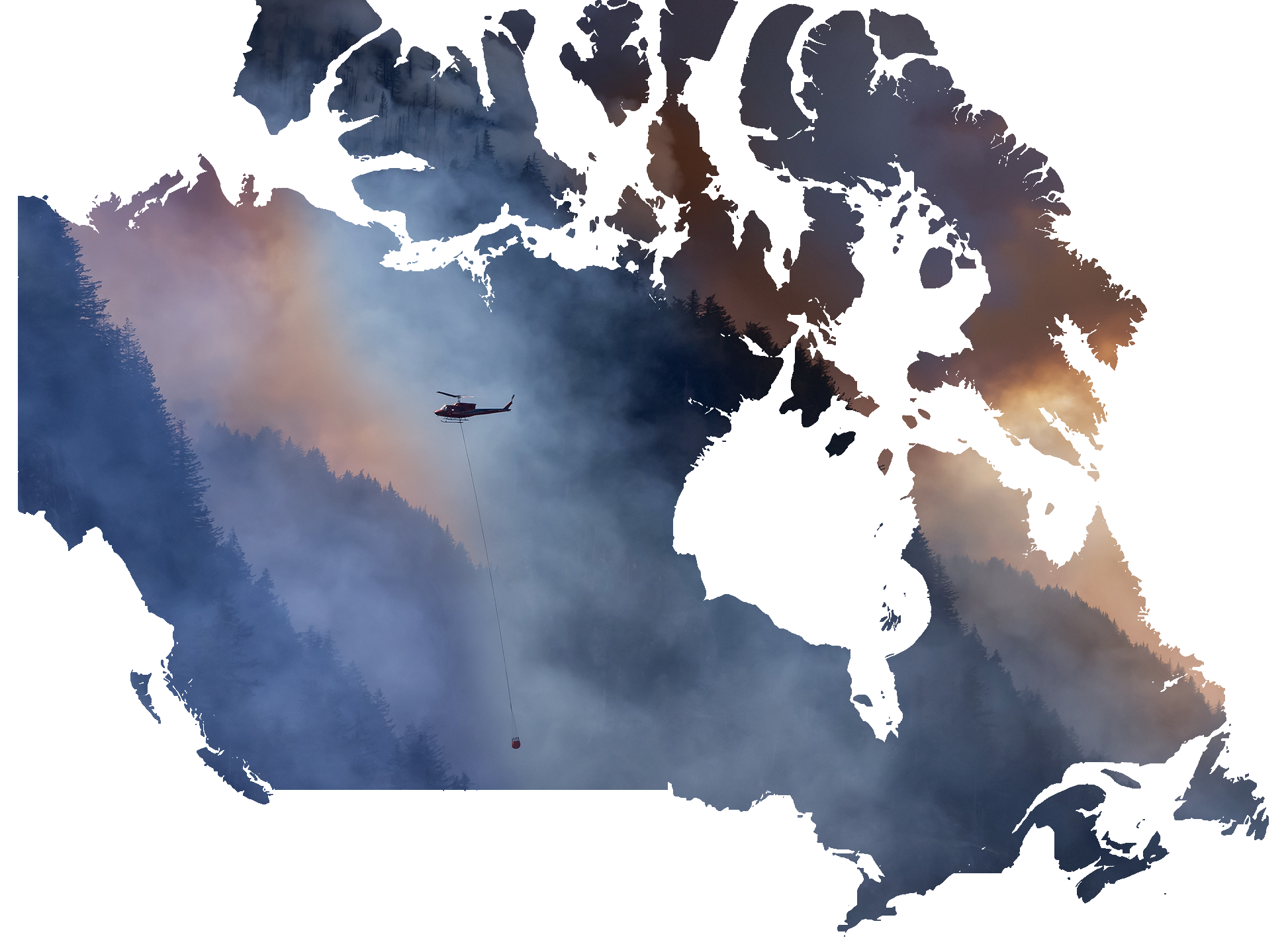
Fire season seems to have replaced summer, especially in the mountains of western Canada.
In the 2019 State of the Mountains Report (Volume 2), we featured an article by Lori Daniels from the University of British Columbia titled “Wildfires: Causes, Consequences, and Coexistence.” Her introduction began with the sentence: “Wildfire has become a wicked problem – complex, challenging, and full of paradoxes.”
Daniels, one of Canada’s foremost experts on wildfire, described the summers of 2017 and 2018, when intense, fast-moving, and uncontrollable wildfires burned through a record-breaking 2.5 million hectares of grasslands and forests in British Columbia. The 2017 fires forced the evacuation of 65,000 people, and triggered a seventy-day state of emergency. And at the peak of the 2018 wildfire season, 566 fires burned simultaneously across the province alone. Recognizing that fires were likely to increase in the future, Daniels provided an overview of some transformative changes necessary for wildfire and forest management in order to improve forest and community resilience to contemporary and future wildfires.
But the reality is that climate change, decades of forest management practices, and other human activities have contributed to increased vulnerability. In 2023, record-breaking fires in Canada burned an estimated 18.5 million hectares, and this was followed by two subsequent years of similarly extreme fire activity. The destructive 2023-2025 fires represent not only the most extreme multi-year fire episode in Canada this century, but also the most severe since records began in the late 1950s.
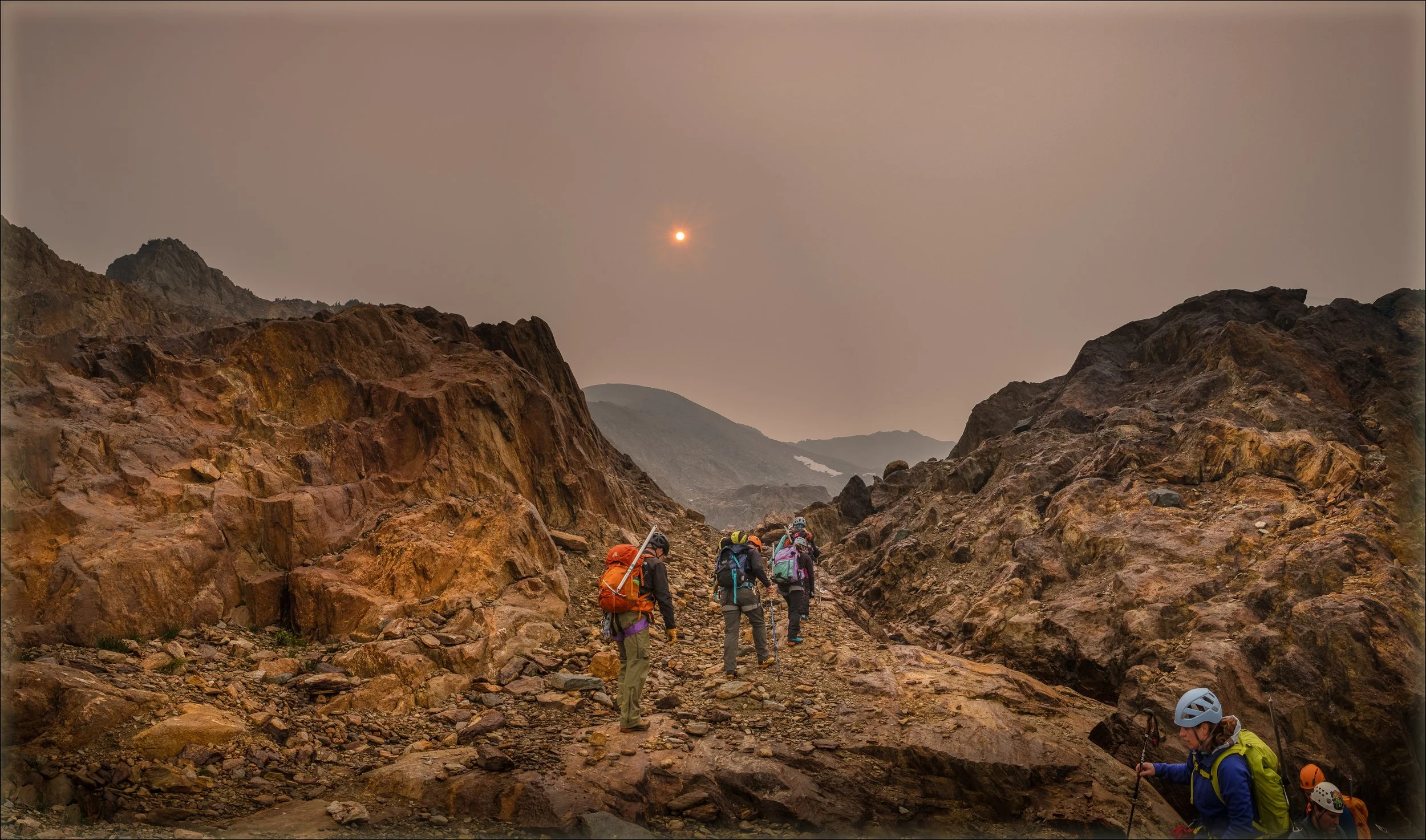
Mountaineers exploring smokey ridgelines during the ACC's 2018 Hallam Glacier GMC. Photo: Mary Sanseverino
These fires displaced and destroyed communities and also released substantial amounts of carbon and particulate emissions into the atmosphere with widespread impacts on air quality and human health. Total emissions in Canada during 2023-2025 were estimated to be between 250 and 575 teragrams of carbon per year, marking the highest values in the past two decades.
This year the ACC’s State of the Mountains Report revisits fire, with a feature Q&A-styled article that explores how two communities in the Rocky Mountains, Jasper and Banff, are facing a future where fire will be a constant, rather than a hypothetical. We are very grateful to both mayors, Richard Ireland and Corrie DiManno, for their willingness to share their perspectives about the impacts of fire on their communities – before, during, and afterwards.
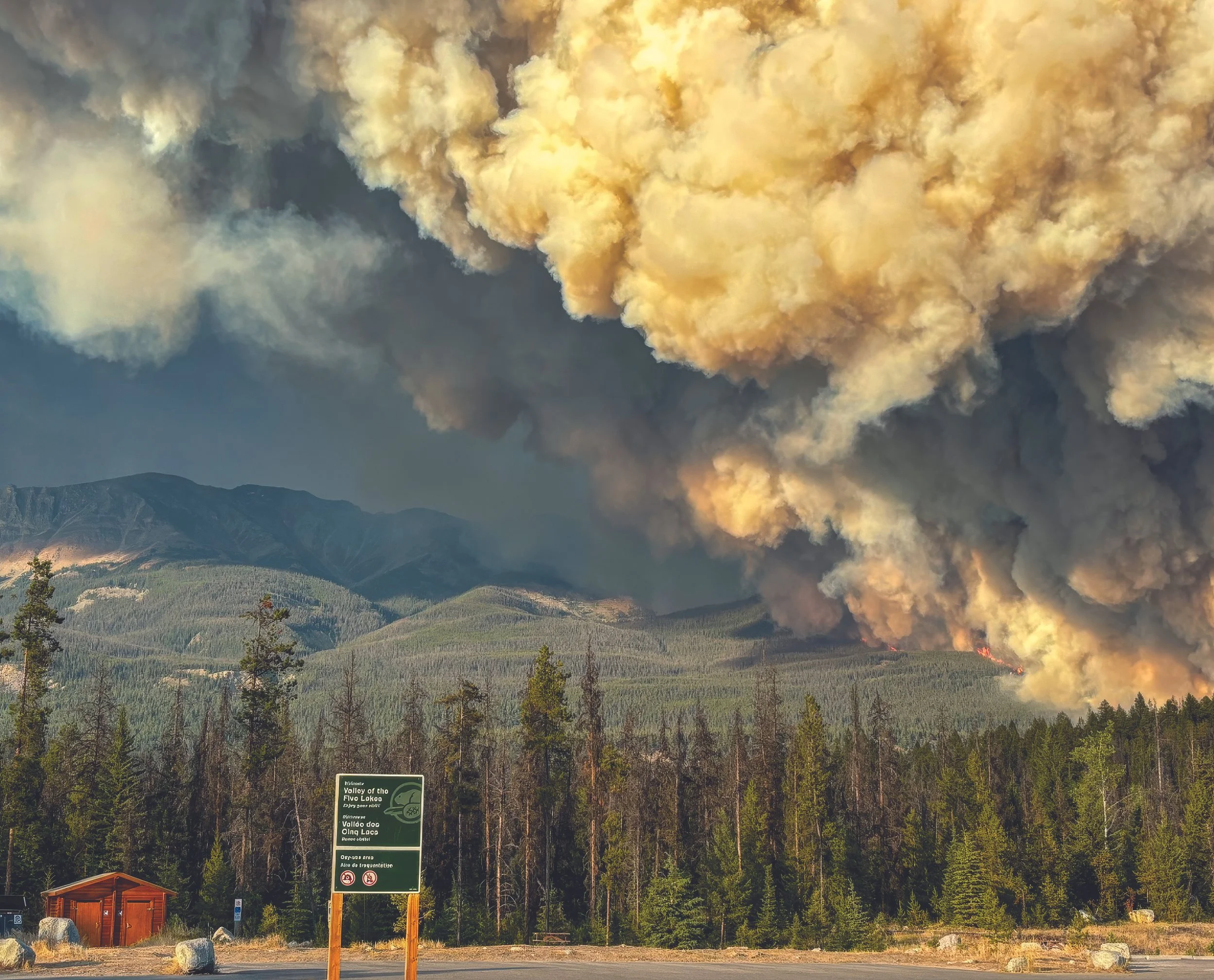
Wildfire smoke billowing above The Valley of the Five Lakes, Jasper National Park. Photo: James Eastam, Parks Canada, July 23, 2024
Other contributions in this Volume also revisit previous stories. Canadian ornithologist Kathy Martin provides new insights regarding the importance of mountains for migrating birds. Biologist Gordon Stenhouse describes the challenges of managing grizzly bear populations in Alberta in the absence of adequate census data. Conservation scientist Chris Darimont has crafted a message of gratitude from salmon to the Coast Mountains, and the ecosystems in between.
We also have two stories about the dismantling of mountains. Geophysicist Jan Dettmer and colleagues from the Yukon Geological Survey provide some striking commentary and images in the wake of the numerous slope failures in the St. Elias Mountains following a magnitude 7.0 earthquake last December. And Earth scientists Kira Holland and Colin Cooke, from the University of Alberta, discuss the widespread impacts of the redistribution of coal dust and polycyclic aromatic compounds from mining operations in the Elk Valley.
We are also delighted to feature an essay describing the innovative Girls* on Ice Canada program, which encourages everyone to see themselves as an explorer, a scientist, and a force for positive change. And Keith Haberl takes a sobering look at the challenges of climate change for the ACC’s extensive backcountry hut network, the largest in Canada.
Readers familiar with the Report will notice an exciting new look and feel this year. Yes, change is afoot with the Report itself too!
We are pleased to announce that our editorial team has expanded to include long-time ACC Vancouver Island Section member Mary Sanseverino. Mary is an internationally recognized repeat-photography expert from the University of Victoria’s prolific Mountain Legacy Project, as well as the Vice President of UIAA’s Mountain Protection Commission. We are also joined by the equally talented ACMG guide Tim Patterson, from Calgary, who is a former member of the Club’s Board of Directors and the owner/operator of Zucmin Guiding, an independent professional Indigenous adventure tourism company.
And after eight volumes, stretching over as many years, our editorial team bids warm farewell to Zac Bolan, our sage Calgary-based layout and production whiz. For us, it’s been an honour and pleasure to work with “ZB,” who was always quick to remind us of the Report’s centrality to the ACC’s mission to support education and foster stewardship. As ZB steps down from this role, he passes the torch to the equally adept Tamasin Langton, the main talent behind this year’s volume brand-new look and feel!
We welcome Tamasin, Tim, and Mary as they help steer the State of the Mountain Report towards its second decade.
Author Bio
David Hik is an ecologist at Simon Fraser University and the Chief Scientist at Polar Knowledge Canada.
Zac Robinson is a historian at the University of Alberta and a Governor of the Royal Canadian Geographical Society.
Together, they have been co-editing the ACC’s State of the Mountains Report, alongside UBC environmental geographer Lael Parrott, for nearly a decade.