
2025 Foreword: Recognizing the International Year of Glaciers’ Preservation
By Lael Parrott, Zac Robinson, and David Hik
Since 2018, the Alpine Club of Canada has published the annual State of the Mountains Report. The Report includes short, informative highlights that provide a summary of environmental, societal, cultural, and Indigenous perspectives on the most significant changes taking place in Canada’s mountains.
Of the nearly 80 articles published over the past 7 years, some 25% of them have dealt with aspects of the Canadian cryosphere. The cryosphere refers to areas with water in any of its frozen forms – ice, snow, glaciers, permafrost, and everything in between. These frozen features of the landscape are being impacted by rising global temperatures, and as they melt and thaw there are numerous and generally negative consequences for people, economies, and ecosystems.
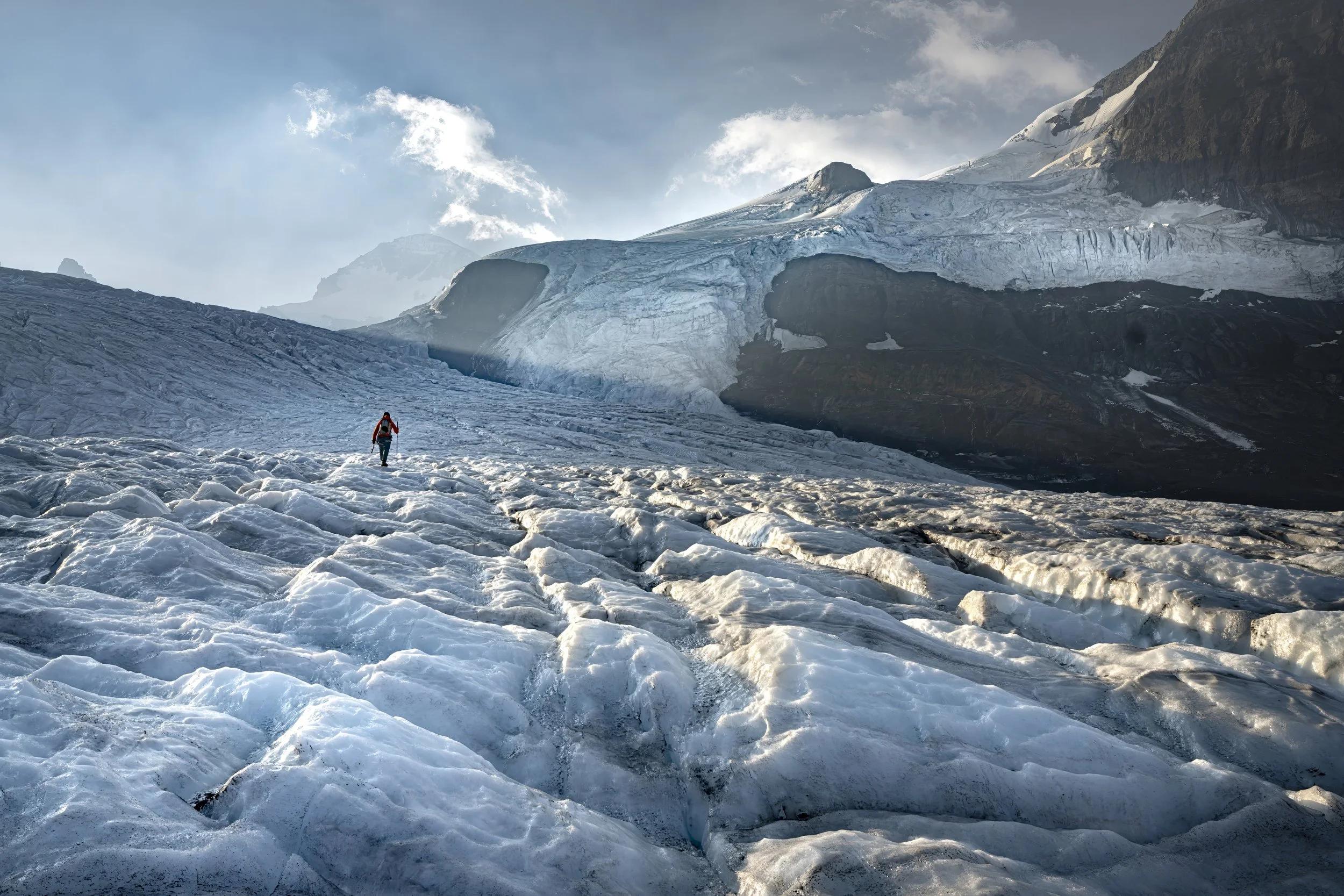
Photo: Christopher Candela
2025 is the United Nations International Year of Glaciers’ Preservation, or IYGP. Activities around the world have focused on fostering collaboration, promoting research, improving access to data, raising awareness, and mitigating the impacts of glacier retreat caused by climate change. IYGP initiatives are vital for safeguarding glaciers for current and future generations. Events held across Canada during the IYGP are both a celebration of the spectacular beauty of our glaciated places and a call to action to recognize the impacts that their loss will have, and is already having, on the lives of Canadians across our country. According to the Canadian National Committee for IYGP (https://www.unglacieryear.ca), the purpose of calling for “glaciers’ preservation” is not to “save” just the glaciers, but rather to recognize the significance of water in its all of its frozen forms using glaciers as a symbol of the changes underway.
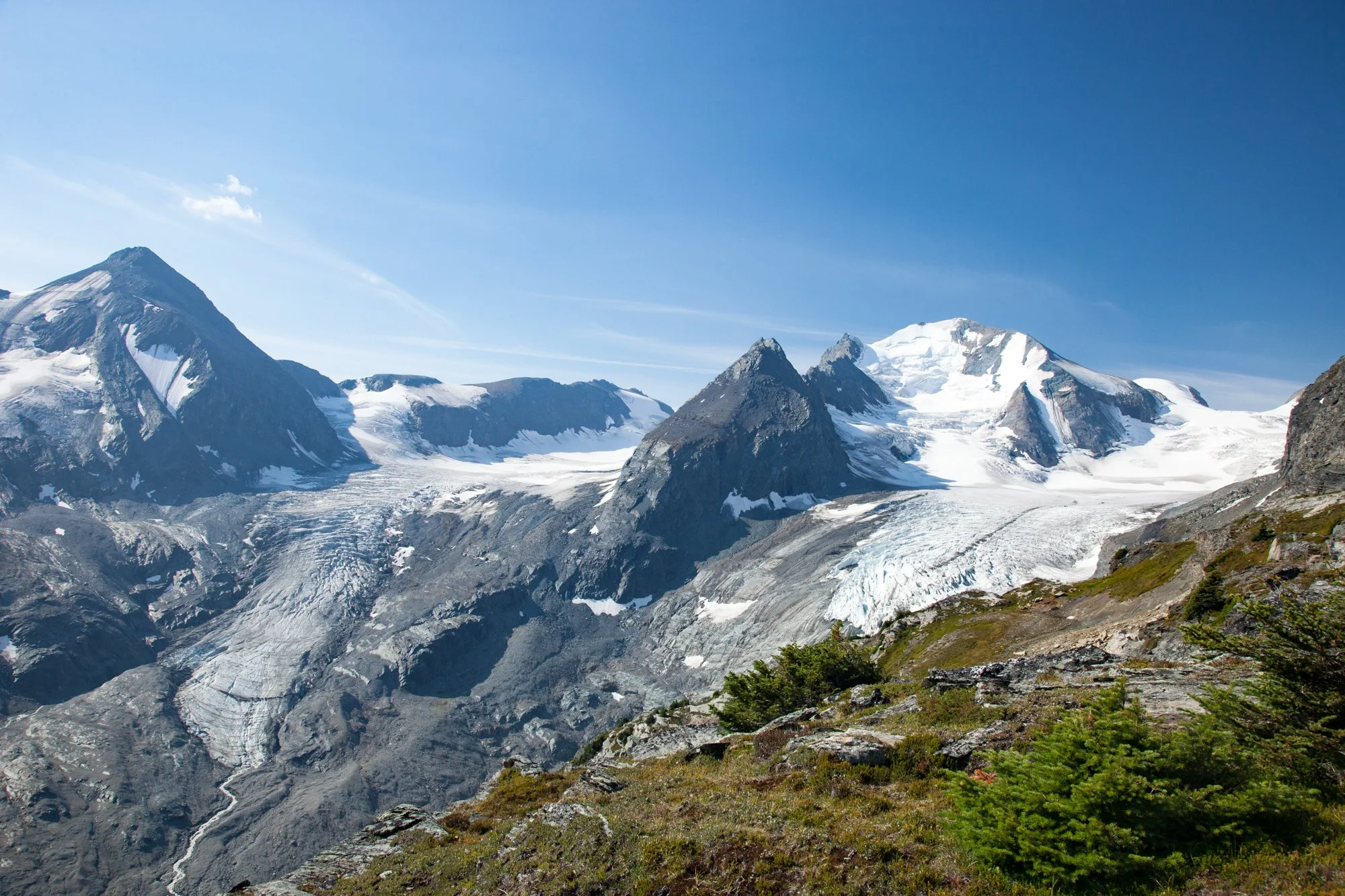
Eyebrow Peak, Purcell Mountains, 2015. Photo: Zac Robinson.
Outside of the polar regions, Canada is the most glacierized country in the world, with over 200,000 square kilometres of glacial ice. But that ice has been quickly disappearing. Between 1985 and 2020, an estimated 1,141 glaciers have disappeared in BC and Alberta (an 8% decline), and the loss of ice area has accelerated significantly this decade. In fact, recent projections show most western Canadian glaciers will disappear by 2100, losing 74-98% of their volume. This process involves rapid retreat, increased thinning, and a “death spiral” where factors like soot from wildfires darken ice, absorbing more solar radiation and speeding up melting. The loss of glaciers impacts water resources, ecosystems, and can lead to increased hazards, such as landslides and lake outburst floods.
The IYGP has highlighted the need for continued monitoring to document changes in glacier height, width, and melt, in order to better understand and communicate the impacts of these changes. At the same time, developing better climate models that incorporate physical processes like glacial darkening will help to improve predictions of future glacier loss.
Through the State of the Mountains Report, The Alpine Club of Canada will continue to help raise awareness of changes taking place in Canada’s mountains. This reprinted collection of articles from previous volumes highlights the expertise of Canadian researchers, and the people and communities who live in mountain places.
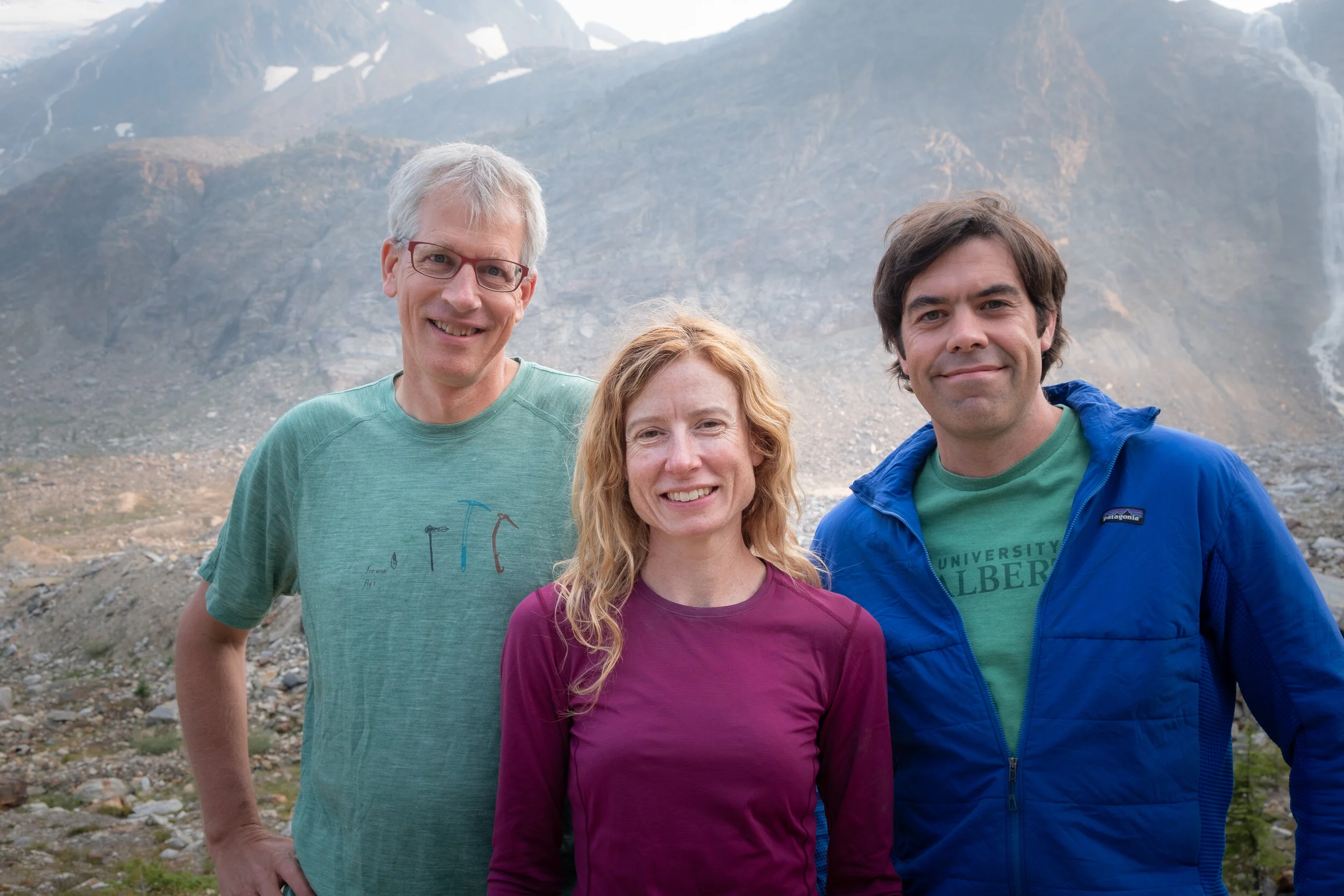
Left to right: David Hik, Lael Parrott, and Zac Robinson – 2018. Photo: Mary Sanseverino
The State of the Mountains Report is co-edited by long-time Club members Lael Parrott, Zac Robinson, and David Hik. Parrott is an environmental geographer at the University of British Columbia, Robinson is an historian at the University of Alberta, and Hik is an ecologist at Simon Fraser University and Chief Scientist at Polar Knowledge Canada. All Fellows of the Royal Canadian Geographical Society, the team is dedicated to geographic literacy and the betterment of mountain peoples, places, and practices.