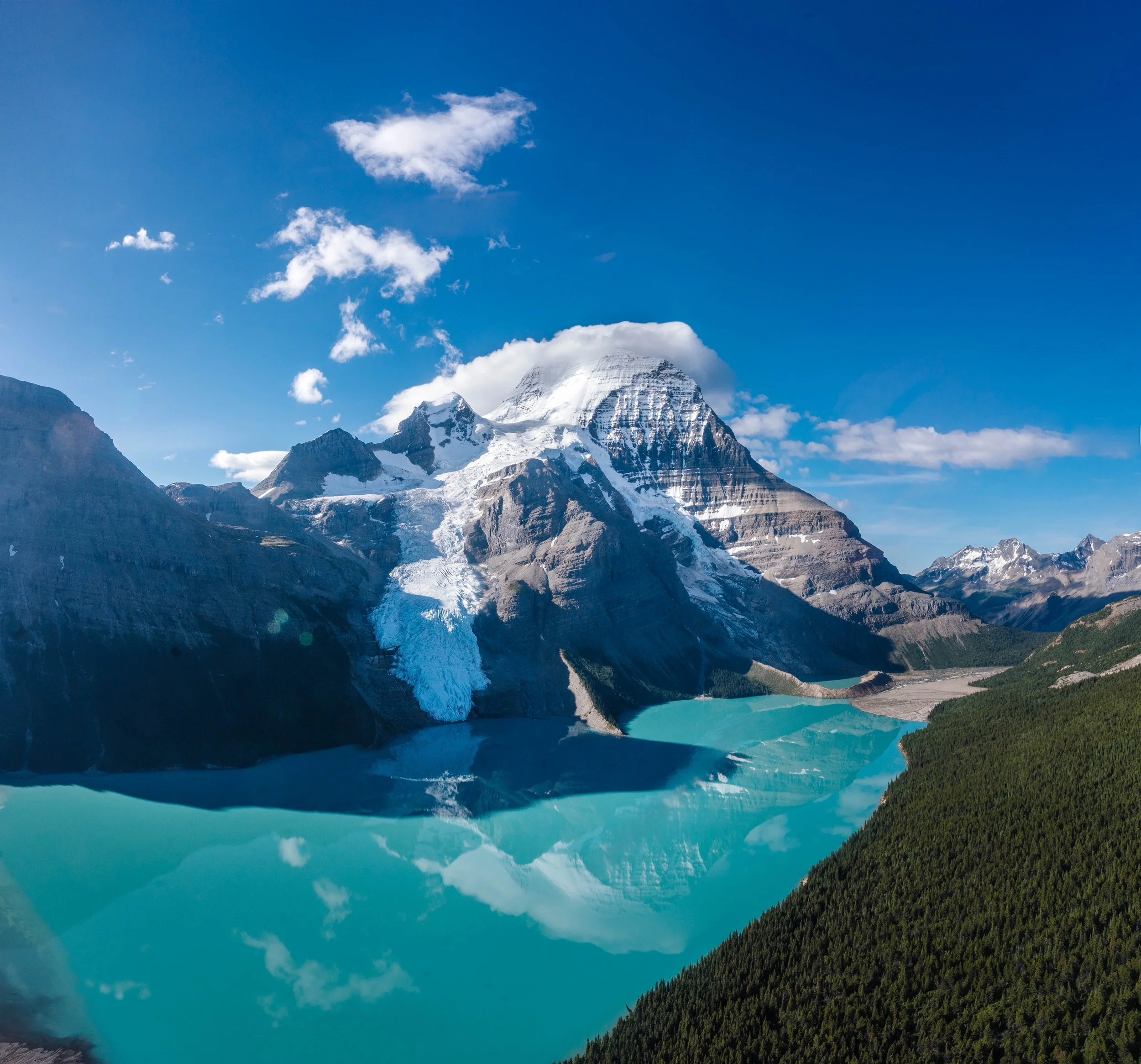
Observations and Modelling of Glacier Mass Changes in Western Canada
The retreat of mountain glaciers worldwide is a key indicator of modern climate change, with mass loss from glaciers contributing to sea level rise and to river flows during dry and warm parts of the year. In western Canada, maintenance of low flows by glacier meltwater is essential for maintaining biodiversity, hydro-power generation, agricultural irrigation, and water supply for major cities and small towns.
Read More
Remote Sensing Strategies to Monitor British Columbia’s Glaciers
British Columbia is blessed with an abundance of glaciers, or about 16,428 individual ice masses based on the last provincial inventory. These glaciers act as important buffers for many mountain ecosystems since they provide cool, plentiful water to mountain rivers during late summer when the seasonal snowpack is depleted.
Read More
Rapid Loss of Perennial Alpine Ice Patches, Selwyn and Mackenzie Mountains, NWT
On August 16, 2017, we made our annual visit to an alpine ice patch known as KfTe-1 as part of the Northwest Territories (NWT) Ice Patch Monitoring Program in the Selwyn and Mackenzie Mountains. Our project team – a long-term partnership between archaeologists from the Prince of Wales Northern Heritage Centre and Shúhtagot’ine Elders from the Tulita Dene Band – had stopped at this site almost every year since 2005 to observe its condition and collect archaeological artifacts and biological specimens melting out of the ice.
Read More
Accelerated Change in the Glaciated Environments of Western Canada
In this article, Alexandre Bevington and Brian Menounos summarize recently published research that updates maps of western Canadian glaciers using new automated mapping tools.
Read More
Living and Breathing Change: A Southern Tutchone Perspective on Climate and Research [2019]
From the viewpoint of an indigenous community in the face of climate change, explore the necessary need to change and adapt as crossings melt and water levels lower, and the vital partnership that should exist when future decisions and policies on climate change are made to Traditional Territory.
Read More
Glaciers [2018] -FR
Note de la rédaction : Comment observer et analyser les changements qui touchent nos glaciers, et pourquoi ces changements sont-ils importants pour nous et notre environnement alpin ?
Mike Demuth nous présente les tendances et le recul des glaciers qui caractérisent le changement climatique, ainsi que ce à quoi nous pouvons nous attendre pour l'avenir.
Read More
Avant-propos 2025 : Reconnaître l’Année internationale de la préservation des glaciers
Le Club alpin du Canada publie depuis 2018 son Rapport sur l’état des montagnes annuel, qui inclut des faits saillants courts et informatifs qui résument les perspectives environnementales, sociétales, culturelles et autochtones sur les changements les plus importants qui se produisent dans les montagnes canadiennes.
Read More